
Since 2017, Connecticut’s finances have been defined by the fiscal guardrails—a series of statues controlling spending. Created in a time of crisis, they were emergency measures to improve CT’s financial health. They filled the Rainy Day Fund, paid down longstanding pension debt, and improved CT’s credit rating. These are important achievements—but they have come at a profound social cost.

For many years, services and programs historically provided by the state have been outsourced to nonprofits who are asked to do more with less. Mental health, workforce training, addiction recovery, youth services, elder care, support for disabled adults, and other essential services are being consistently underfunded. Because of this systemic underinvestment, our state’s social infrastructure is crumbling, and our communities are suffering the consequences.
2026 Legislative Update:
The federal HR 1, otherwise known as The Big Beautiful Bill, wasn’t just another budget bill. It was a targeted attack on our state’s most vulnerable residents, shifting resources away from people in crisis and toward the ultra‑wealthy. Connecticut has many more financial resources than many states, and had multiple options to change fiscal policy to proactively soften the blow and save lives in CT in response to the federal cuts. Connecticut did not do that.
As CT for All director Norma Martinez Ho-Sang said at our Health Justice Now advocacy day: our legislature chose a health crisis. It also chose a hunger crisis. And landlords, hospital executives, and insurance companies are satisfied with that choice.
This was not a strong session for economic justice. Pretending otherwise would ignore the outrage and resolve this work requires. Here’s where we pushed, and what we got:
Senate Bill 3: Basic Health & Hospital Financial Assistance
- We fought for: the development and funding of programs that would have helped people seeing rate increases from ACA tax credit expiration, low-income families facing a benefits cliff, and low-income patients facing unaffordable hospital bills.
- What we got: a commitment to “study” the potential of such a program, only IF the feds interfere with an existing program called Covered CT.
Senate Bill 401: Bridge Programs for Health, Food, and Housing
- We fought for: Concrete bridge programs to provide medical, nutrition, housing, and job help for the most vulnerable in our state who will lose federal benefits due to new work rules that are causing many people to lose benefits.
- What we got: A mitigation “working group” to advise and monitor—no guaranteed benefits, no direct help.
Senate Bill 497: Food Support for Those Cut Off SNAP
- We fought for: A transitional food benefit for veterans, Special Immigrant Visa holders, lawfully present immigrants, and others losing SNAP.
- What we got: Nothing but a clear mandate to organize harder.
We sought policies that would save lives. Instead, we were handed studies, working groups, and in some cases, silence. Hospitals received $1.7 billion. Low‑income patients received no new financial assistance.
The story of this session is a legislature that refused real, durable fiscal reform with basic protections—while hospital, insurance, and landlord lobbies drowned out residents living in poverty.
We are naming who blocks this moral, faith-driven work, and we will keep pushing for accountability, building stronger coalitions, and amplifying the people most harmed. CT has the money. What we’re asking is neither radical nor unrealistic.
Next in our fiscal campaign, we’ll sharpen the moral call to close the gap. Too many believe Connecticut is “doing pretty well.” The truth is: people are suffering deeply in a wealthy state where that suffering is a policy choice, not an inevitability.
2025 Legislative Update: GHIAA’s most complicated issue at the outset remains so today. We joined our voices with many others in calling for the state to create a budget that truly invests in the human needs of our communities- which requires reforming the policies that currently funnel billions of dollars in existing revenue away from the places where they need to be spent.
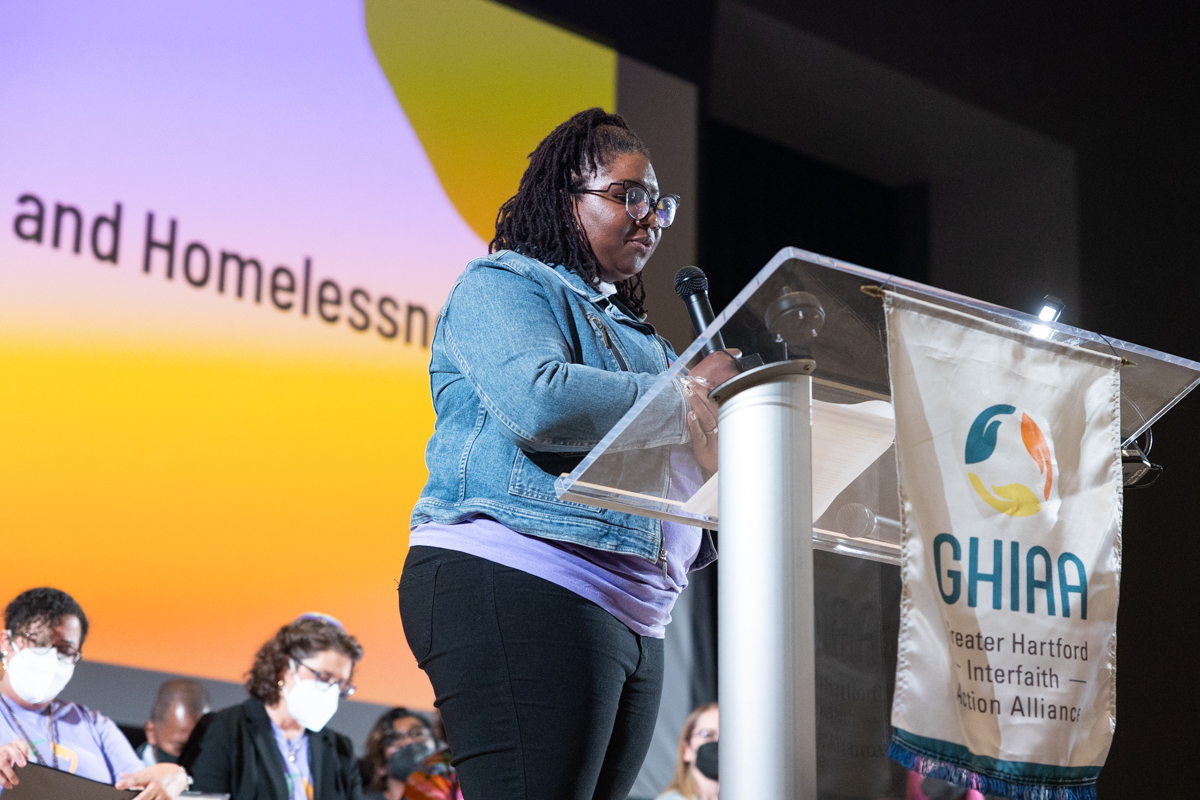
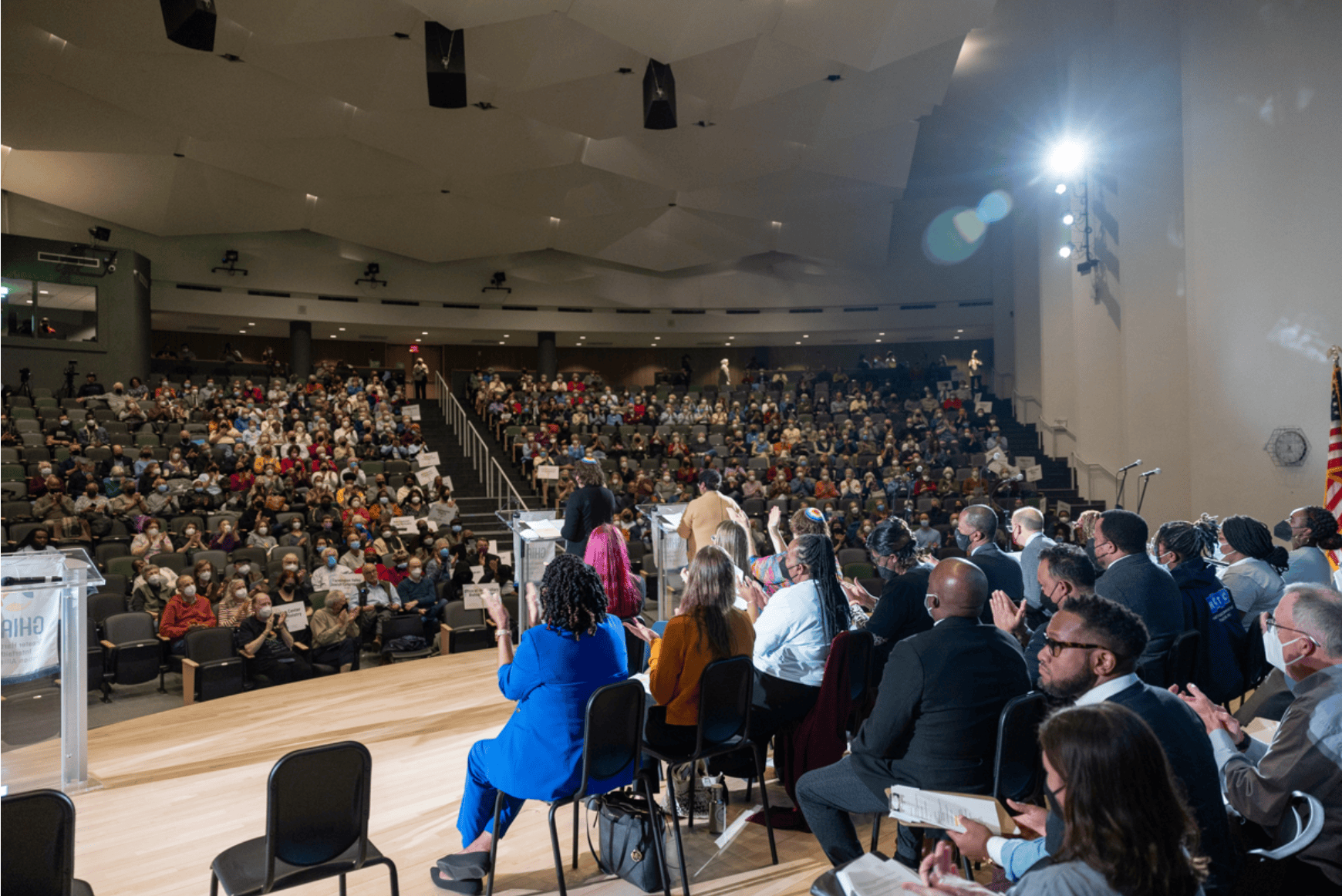
GHIAA held an impressive action at Immanuel Congregational Church with CT for All and SEIU 1199, with over 750 people present. Speaker of the House Matt Ritter made bold commitments about lifting the guardrails and declaring a fiscal emergency.
Those commitments were not fulfilled. An emergency was not declared. The guardrails were not lifted.
The only true modification to the fiscal guardrails was an increase in the volatility cap – an important change, but not enough. The new budget also invests significant resources via off-budget accounting that puts them outside the spending cap – which does allow for some increased investment, but leaves the restrictions in place rather than achieving systemic change.
We are told there will likely be a special legislative session later this year, once the federal budget has been finalized, to address the impact of expected cuts.
GHIAA’s Impact: We were an important voice in this conversation because we do not stand to gain directly from the state budget, but are making the case on the moral grounds of what is actually good for our communities and faithful to our values. We brought some education, clarity, and understanding to a confusing issue, and raised its profile with some legislators. What we did not find a way to do was hold Speaker Ritter accountable for his commitments or influence Governor Lamont.
When we advocate for increased funding for critical human needs, the response from our elected leaders is, “There’s no money.” Why? Because billions of dollars that could be invested in our communities are being withheld by the guardrails instead. The fiscal roadblocks solve a problem we’re no longer facing, and in doing so, block future progress. Especially in light of impending federal cuts, it is imperative that our state stop underfunding essential services. It’s time to reform and restructure the fiscal roadblocks.
To learn more about the fiscal guardrails and how they are starving our communities of necessary resources, check out this fact sheet.
GHIAA has endorsed the Connecticut For All statement of principles for fiscal reform. You can view the principles online here.